Showing posts with label Fruit. Show all posts

Saturday, 7 February 2015

38. Chaussons Aux Pommes

One of my favorites as a kid, a nice warm apple turnover brings back so many wonderful memories of chilly Canadian winter days in Quebec and the fabulous french breakfasts treats we would consume.


Chaussons Aux Pommes
Makes 8-9

One portion Puff Pastry
500g Applesauce, cold
1 egg, to glaze

Preheat your oven to 180ºC. Roll your puff pastry into a rectangle that's 23cm x 45cm, about 5mm thick. Using a 11cm diameter cookie cutter (or a mug and a paring knife), cut out as many circles as possible. Roll each disc lengthways to 3mm thick to create an oval. Place on a baking tray lined with parchment paper, spaced evenly apart.


Whisk your egg. Add 2 heaping tablespoons of applesauce to the center of each disc and brush the edges with your egg wash. Fold your pastry over and press down to seal in your applesauce. Repeat with all your pastry discs, flip them over so the flat side is facing up and egg wash the top. Refrigerate for 10 minutes.


Give your chaussons a second egg wash (this will help it turn shiny and give it a dark golden brown colour), score them using a sharp paring knife, prick the tops to create steam holes and bake for 25-30 minutes until risen and golden brown. Allow to cool for at least 10 minutes before devouring. Enjoy!

Friday, 6 February 2015

37. Applesauce

Such a classic! Warm spiced apples with a hint of vanilla is the perfect accompaniment to any breakfast or dessert, or simply eaten on it's own.


Applesauce
Makes about 1kg

6-7 apples*
200g water
50g dark brown sugar
1/2 lemon, juice
1/2 vanilla pod (optional), split in half
1/2tsp cinnamon (optional)

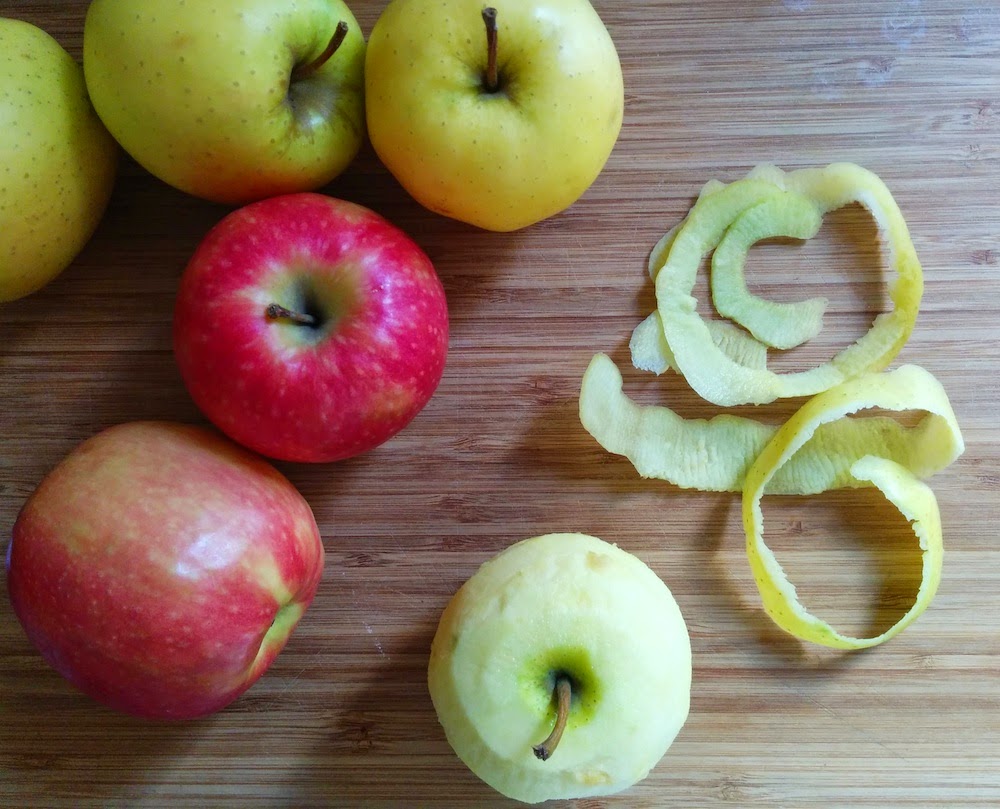
*I used a mix of pink lady and golden. It's important to remember that cooking times vary depending on the type of apple you use. If you want a slightly chunky apple sauce, use a few firmer apples along with softer cooking apples. If you want your compote completely smooth, it's best to stick to the softer apples, or give the mixture a final whizz in the food processor.

Peel, core and finely chop your apples. Place in a large casserole with your water, lemon juice, sugar and spices. Bring to a boil over a medium heat, cover and cook for 15 minutes, stirring occasionally. Remove the lid and continue cooking a further 5-10 minutes until your apples are cooked though and start to break apart. Eat warm or allow to cool. Stores in the fridge for up to a week or freezes well for up to 9 months.


Monday, 2 February 2015

33. Tarte Bourdaloue

This classic french tart uses vanilla poached pears and crème d'amandes to make for a fabulously delicate dessert.


Tarte Bourdaloue
Makes one 23cm tart

For poached pears:
3 small firm pears
half a lemon
500g water
250g sugar
half a vanilla pod

For pastry:
200g plain flour
100g unsalted butter
25g icing sugar
2 egg yolks
15g water
pinch of salt

For crème d'amandes:
80g ground almonds
50g unsalted butter, softened
50g caster sugar
1 egg
3-4 drops almond extract (optional)

For glaze:
2tbsp apricot jam
1tbsp water

Start by poaching your pears. In a medium sized saucepan, add your water, sugar and vanilla and bring to a simmer, stirring to ensure all of your sugar has dissolved. Peel your pears and remove the core and rub them lightly with your half lemon. Add to your syrup and simmer for 10-15 minutes, until the pears are slightly softened but still hold their shape. Allow to cool to room temperature.


For your pastry, mix together your flour, icing sugar and salt. Rub in your butter until it resembles fine breadcrumbs then add your egg yolks and mix into a smooth dough. Wrap in cling film and refrigerate for at least 2 hours. Once your dough is well rested, roll out to 2mm thick and line your tart tin, trimming away any excess pastry. Chill until ready to assemble.

Place a baking tray in the middle of your oven and preheat to 180ºC. Drain your pears, cut in half and slice thinly, about 3-4mm thick.


Mix together your butter, sugar and almonds. Add in your egg and almond extract (if using) and stir until evenly combined. Spread crème d'amandes into your chilled pastry case. Fan your pear slices out slightly and, using a knife, lift and place them on top of your crème d'amandes. Place your tart on your hot baking tray and bake for 45-50 minutes until the filling is set and golden.

In a saucepan, heat your apricot jam and water to form a syrup. Strain any lumps and brush your hot tart to glaze.


Sunday, 1 February 2015

32. Apple Pâte de Fruit

These all natural fruit gums are delicious, super easy to make and look so beautiful coated in sugar. Beats the shop bought kind any day! I used the reserved cooking apples from yesterday's jelly, so if you're making both recipes at once, you can sieve your apples once they've finished straining.


Apple Pâtes de Fruits
Makes about 60

2kg golden apples (or reserved cooked apple)
enough water to cover apples
about 750g caster sugar
15g lemon juice

Granulated sugar for coating

Chop your apples up into small pieces. No need to peel or core your apples: the pips are what provide the pectin needed to set your jelly. Add to a large casserole with just enough water to cover your apples. Bring to a boil and cook for 30-40 minutes until your apples are cooked through.

Use the leftover apples from making your apple jelly

Allow to cool slightly before pressing through a fine sieve. Weigh your puree and add the same weight in caster sugar along with 5g lemon juice for every 250g puree. I ended up with 750g of apple sauce and added 750g sugar and 15g lemon juice.

Bring to a simmer and cook over a medium heat until it is so thick that a spoon leaves a clean line through the mixture to see the bottom of the pan. You can also check it's set by putting a teaspoon of mixture onto a frozen plate and freezing for a minute. If it forms a firm jelly, it's good to go.


Pour your mixture into a parchment paper lined tin. Spread it out evenly, cover with another piece of parchment paper and leave to set for 24 hours. Cut into small square and roll in your granulated sugar. Keep in the fridge in an airtight container for up to a month.


Saturday, 31 January 2015

31. Apple Jelly

I've been wanting to make jelly for a while now, and with apples still very much in season in January, it feels like the perfect opportunity to do so. Apple jelly is such a good accompaniment to some of the heartier roasted meats of the cold winter months, and is brilliant when mixed into gravies and sauces. I used golden apples for this recipe, but I think using a variety of tart and sweet apples would work well too.


Apple Jelly
Makes 3 small jars

2kg Golden apples
1.5kg water
1 cinnamon stick
1 star anise
6-7 whole cloves
about 900g caster sugar
about 30g lemon juice

Chop your apples up into small pieces. No need to peel or core your apples: the pips are what provide the pectin needed to set your jelly. Add to a large casserole with your water and spices. Bring to a boil and cook for 30-40 minutes until your apples are cooked through but still hold their shape. Pour your fruit and juice into a scalded jelly bag (or a fine sieve lined with muslin cloth) set over a medium sized bowl and leave to drain overnight.

The following day, measure your juice out into a large casserole**. Add roughly two thirds the weight of your liquid in sugar as well as one tsp of lemon juice for every 200g of apple juice rendered. I ended up with 1.4kg of liquid so I added 900g of caster sugar and 6tsp of lemon juice. Heat gently until your sugar has dissolved.

Meanwhile, prepare your jars by removing any seals and popping the jars on a baking tray with their lids. Put the whole lot into a cold oven and turn it on to 110ºC. Bake for a minimum of 30 minutes. Sterilise any seals and equipment (ie. ladle, funnel, what have you's) by boiling them for 20-30 seconds.

On a high heat, bring your jelly to a boil and cook until your temperature reaches setting point (about 104ºC) or passes the wrinkle test. For the latter you'll need to place a plate in the freezer while you're waiting for your jelly to boil. When you're jelly reaches it's setting point, drop a teaspoonful onto your cold plate and return it to the freezer for a minute. Test by pushing the jelly with your finger: if it wrinkles, it's ready. Skim any white scum off the surface, ladle your jelly into your jars, cover and seal. Allow to cool to room temperature. Make sure your jars are hot when you fill them (this helps create that airtight seal that prevents your jam from going off). Store in a cool dark place, once opened, refrigerate and use within 3 months.

**Reserve your cooked apple to make delicious, homemade Pâtes de Fruits.


Friday, 23 January 2015

23. Rustic Crostata

Have some left over poached fruit? Need an easy dessert idea? A rustic crostata will save the day!


Rustic Crostata
Serves 6

For pastry:
120g plain flour
80g butter, chilled
5g sugar
pinch of salt
40g water, chilled

For filling:
about 400g Poached Fruit
Demerara Sugar

1 Egg, for eggwash

In a large bowl, mix together your flour, sugar and salt. Cut your butter into small cubes and rub in to your flour until it resembles fine bread crumbs. Add in your water a tablespoon at a time until the dough comes together and there are no more dry bits. Wrap in cling film and chill for an hour.


Preheat your oven to 180ºC. Roll your dough out to a 3mm disc. Strain the syrup from your fruit and place in the centre of your disc. Lift the edges of your dough and fold over your fruit, pinching to form a seam. Repeat every few centimetres to create a border all the way around your crostata. Whisk your egg and brush the folds of your pastry, then sprinkle with demerara sugar. Bake for 35-40 minutes until the pastry is a lovely golden brown.

Monday, 19 January 2015

19. Poached Fruit

Brilliant for breakfast with a bit of yogurt (or maybe combined with some of yesterday's granola), a lunchtime snack or quick dessert. This is another one of those recipes you can tweak to your liking. But try and use seasonal ingredients since they'll give better flavour. Apples, pears and cranberries caught my eye at the market this week. The perfect combination of flavour and colour to make for deliciously poached fruit.


Poached Fruit

400g water
200g sugar
1 orange, juice
1 cinnamon stick
1 star anise
3-4 whole cloves
8 cardamom pods, crushed
1tbsp vanilla syrup
3 pears
2 apples
200g cranberries

In a large saucepan, bring your water, sugar and orange juice to a boil. Add in your spices and cranberries and cook for 5 minutes. Meanwhile, peel, core and slice your apples and pears, then add to your pot and cook for 10-15 minutes until softened but still slightly firm. Remove your fruit (set aside to cool) and reduce your liquid to half it's volume until slightly thickened and syrupy. Leave to cool and mix both the fruit and syrup together. Refrigerate and consume within 4-5 days.


Sunday, 11 January 2015

11. Citrus Marmalade

I love the tartness of marmalade. It seems to perfectly cut through the buttery, bready goodness of whatever you may wish to spread it on. It takes a good hour of pith scraping and rind slicing to get started, but it's totally worth the effort.


Citrus Marmalade
Makes about 1.5kg or 3 medium jam jars

2 large oranges
5 clementines
4 lemons
1.5kg water
1.2kg sugar

Wash all your fruit. Cut in half and squeeze the juice over a sieve to collect any pips. Line a bowl with muslin cloth and add the contents of the sieve. Using a spoon or sharp knife, remove as much of the white pith as possible adding to the muslin. Finely slice the peel and add with the water and the collected juices to a very large casserole (minimum 5 litres). Tie a knot in your muslin cloth and add to your mixture. Bring to a boil, cover and simmer for 2 hours. Leave to cool.

Prepare your jam jars by removing any seals and popping the jars on a baking tray with their lids. Put the whole lot into a cold oven and turn it on to 110ºC. Bake for a minimum of 30 minutes (conveniently the same amount of time it takes to cook your jam). Sterilise any seals and jam equipment (ie. ladle, funnel, what have you's) by boiling them for 20-30 seconds. I like to use clamp top jars because I find them beautiful and they make for a nice container to gift jam in. Whatever you decide to use, make sure your jars are hot when you fill them (this helps create that airtight seal that prevents your jam from going off).

Remove your muslin bag and squeeze out as much liquid as possible. Place a small plate in the freezer. Add your sugar into the casserole and cook over a low heat until the sugar has dissolved. Bring to a boil and cook for 20-30 minutes, until the jam reaches it's setting point of 105ºC. Otherwise spoon a bit of hot jam onto your frozen plate and leave for a minute to cool. Push the jam with your finger: if it wrinkles, it's set. Remove from heat and allow to cool for 5 minutes. Give it a little stir before filling your warm jam jars and sealing. If using screw top jars, you'll hear the jars pop into place creating that vacuum seal. Store in a cool dark place for up to a year. Once opened, refrigerate and consume within 3 months.

Saturday, 10 January 2015

10. Orange Polenta Olive Oil Cake

Super easy and super fresh. A great one for the repertoire, especially if you have any gluten free friends coming around for dinner!


Orange Polenta Olive Oil Cake
Makes one 21cm cake, serves 10

For cake:
45g polenta
200g sugar
100g ground almonds
1.5tsp baking powder
100g olive oil
4 eggs
1 orange, zest
1 lemon, zest

For syrup:
45g sugar
1 orange, juice
1 lemon, juice
1 cinnamon stick
4 cloves
8 cardamom pods

80g flaked almonds, lightly toasted, to finish

Line the bottom of your cake tin with parchment paper. Mix together your polenta, sugar, almonds and baking powder. Add in orange and lemon zest, eggs and olive oil, give it a good whisk, then pour into your tin. Pop it into a cold oven and turn on to 180ºC and bake for 40-45 minutes until set or a knife inserted into the centre of the cake comes out clean. If the top starts to brown too much cover with a bit of foil.

While your cake is cooking prepare your syrup. Crush your cardamom pods and combine in a small saucepan with the sugar, cloves, cinnamon and orange and lemon juices. Bring to a boil and cook for about 5 minutes until slightly reduced. Strain the mixture and reserve. Once your cake has finished cooking, prick with a skewer and brush the syrup over top. Sprinkle with toasted almond flakes and dab with a bit more syrup.


Wednesday, 7 January 2015

7. Apple Pie

This is one of those recipes I remember by heart from when I was younger, because it's one my dad was a master at making. I remember the smell of the cinnamon and cloves, and seeing how many sugar and spice coated apple slices we could eat before they were topped with a pastry lid and baked. It's a classic, and although people are obsessed with new and exciting flavour combinations or deconstructed things, I think this apple pie stands out with it's simplicity and the irreplaceable memories that go along with it.


Apple Pie
Makes one 23cm pie

For pastry:
350g plain flour
250g unsalted butter, cold, cut into cubes
15g sugar
1tsp salt
about 125g water, chilled

1 egg, for egg wash
granulated sugar to coat

For filling:
7 Granny Smith Apples (or any other tart variety)
100g dark brown sugar
56g caster sugar
20g cornflour
1/2 lemon juice
1 tsp ground cinnamon
pinch of ground cloves
40g unsalted butter, cut up into small cubes

Start by making the pastry. Mix together the flour, sugar and salt. Rub in your chilled butter until it resembles coarse bread crumbs (don't worry if there are any larger pieces, they will help to make the pastry flaky once rolled). Add in your water a tablespoon at a time until the dough comes together and there are no more dry bits. Divide into two and shape into discs, then wrap in cling film and chill for an hour.

Roll one of the discs out to 2mm in thickness. Line your pie tart, prick the base with a fork and chill for a further 30 minutes or until ready to use.


Preheat your oven to 180ºC. Peel, core and slice your apples. Mix together with the sugars, cornflour, lemon juice and spices. Fill your chilled pastry case and spread the small cubes of butter over top.


Roll your second disc out quite thinly into a long rectangle about 1mm thick. Cut strips about 3cm wide. Start the basket weave of your top crust by covering the pie with parallel strips of dough. Then fold back every other strip and lay a new piece perpendicular to them. Place the folded strips back over top of your pie and alternate folding back every other strip and adding a new strip perpendicular. Then it's over, under, over, under until the whole pie is covered. This may take some practice to master, but hey, it's food... it's all going to be delicious in the end. So don't worry if it takes you 2 or 3 pies to master this technique, I'm sure family and friends won't mind.


Trim the excess dough away, crimp the edges and egg wash the top of your pastry. Sprinkle a bit of coarse sugar overtop and bake for 50-60 minutes until golden brown. If you're feeling extra fancy, top a slice with a bit of vanilla ice cream when serving (I know Dad would!).

Sunday, 4 January 2015

4. Lemon Meringue Pie

One of my all time favorites: a nice bit of pastry filled with tart lemon custard and topped with a cloud of meringue gets me every time!


Lemon Meringue Pie
Makes one 20cm pie

For Pastry:
175g plain flour
125g chilled unsalted butter, cut into small cubes
1.5 tsp sugar
1/2 tsp salt
60g water

For Lemon Custard:
4 Lemons, juiced (zest of 1)
250g water
100g caster sugar
40g cornflour
4 egg yolks
50g unsalted butter

For Meringue:
4 egg whites
225g icing sugar
pinch of salt

Start by making the pastry. Mix together the flour, sugar and salt. Rub in your chilled butter until it resembles coarse bread crumbs (don't worry if there are any larger pieces, they will help to make the pastry flaky once rolled). Add in your water a tablespoon at a time until the dough comes together and there are no more dry bits. Wrap in cling film and chill for an hour.

Roll the dough out to 2mm in thickness. Line your pie tart, trim away any excess pastry and crimp to your liking. Prick the base with a fork and chill for a further 30 minutes or until ready to use.

Preheat oven to 180ºC. Line your prepared pastry with a bit of parchment paper and fill with baking beans, rice, dried beans, what have you (this is to ensure the pastry doesn't puff up too much during the baking process). Bake for 15 minutes, remove beans and parchment paper and continue baking for a further 10-15 minutes until golden brown and nearly cooked. This process is called baking blind. It's important that your pastry case be almost fully cooked to avoid a soggy crust.

While the pastry is cooking, prepare your lemon filling. In a medium sized bowl, mix together your egg yolks, sugar and cornflour to form a paste. Bring water to a boil with the zest of 1 lemon. Strain the mixture into your lemon juice to remove the zest, then slowly add to the eggy paste, whisking constantly to avoid any lumps. Pour the mixture into a saucepan and continue whisking over a medium-low heat for 5 minutes until the mixture has thickened. Remove from heat, whisk in your butter, line with a bit of parchment or film (to prevent the custard from forming a skin) and set aside until ready to assemble.

For the meringue, prepare a bain marie by filling a medium saucepan with 3-4 cm of water and bring to a low simmer. Whisk egg whites in a heat proof bowl (which is slightly larger that the width of your saucepan) with a pinch of salt until they start to hold peaks. Place over your bain marie, add your sugar and continue whisking until the mixture has thickened and is glossy, about 6-8 minutes. Remove from heat and whisk until cool. This type of meringue is called meringue cuite or swiss meringue because it is cooked over hot water to stabilise the meringue and prevent it from shrinking in the oven when baked.

Lower your oven temperature to 120ºC. Assemble pie by pouring your lemon filling into your pastry case. Add your meringue over top, starting with the sides of your pie so it doesn't sink into the filling. Bake for 1 hr. Allow the pie to cool before slicing into it (if you can help yourself from picking at it... YUM).

Friday, 2 January 2015

2. Banana Muffins

These puppies are a sinch to make and a great way to use up any old bruised bananas you've got kicking about.


Banana Muffins
Makes 8

75g unsalted butter
100g brown sugar
1 egg
2 bananas, mashed
180g plain flour
1tsp baking soda
pinch of salt

Preheat oven to 170ºC. Cream together your butter and sugar. Beat in the egg and mashed bananas and finish off by folding in the flour, baking soda and salt. Spoon the mixture into lightly a lightly greased muffin tray and bake for around 20 mins. The best way to test if these bad boys are done is to insert a skewer into the middle of one of the muffins and if it comes out clean then they're ready to come out.